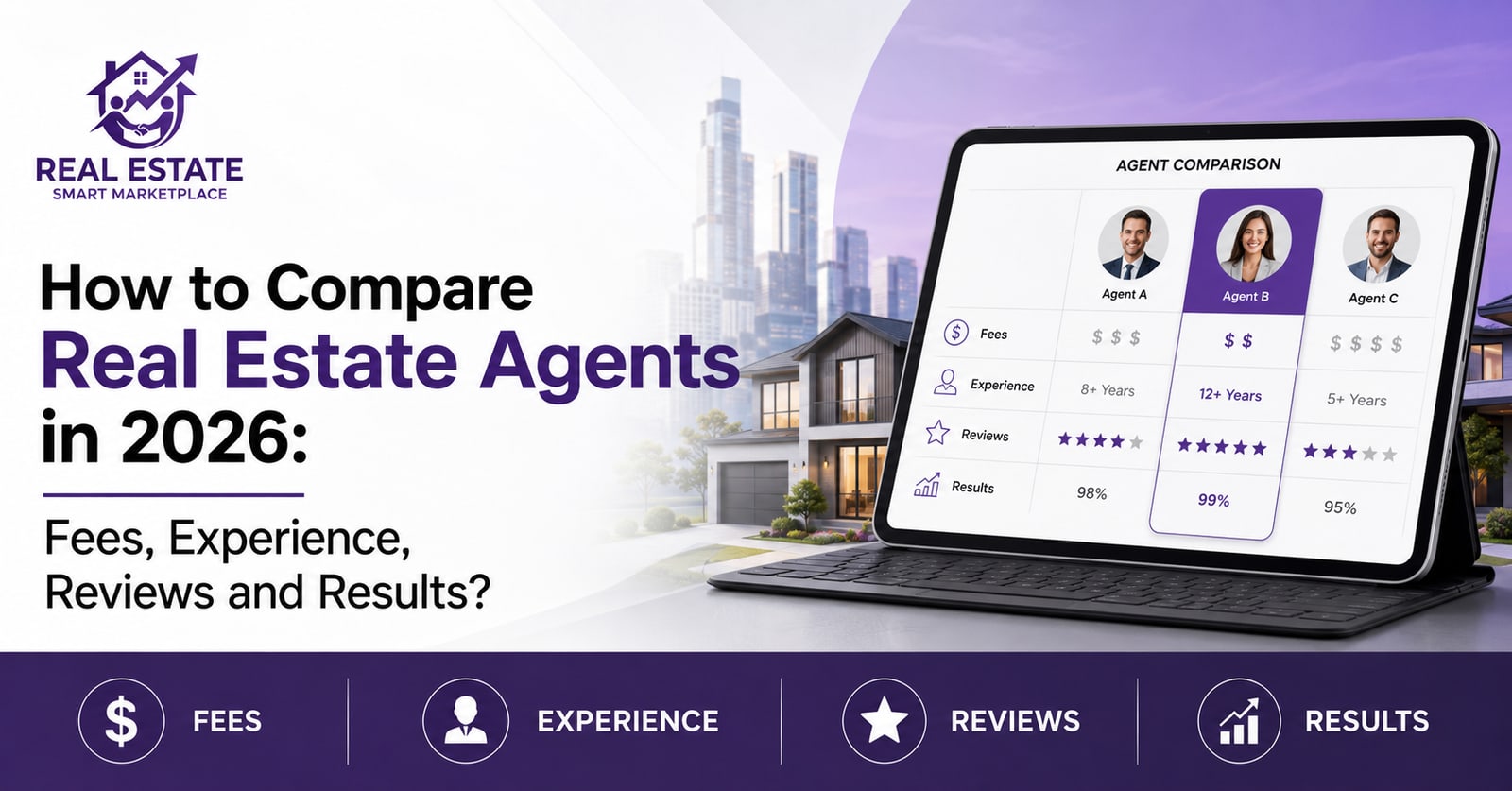
Choosing the right agent can affect how smoothly you buy or sell a home and how confident you feel during a major financial decision. In 2026, consumers have more information and more choices than ever. That means you need a clear way to Compare Real Estate Agents instead of choosing the first name you see online. Fees, local experience, reviews, communication, and recent results can all help you decide who may be the right fit.
Why Comparing Agents Matters More in 2026
The U.S. real estate market has changed in recent years, especially around agent compensation and buyer representation. For many MLS participants working with buyers, written buyer agreements are required before touring a home. These agreements should explain services and compensation, and broker fees and commissions are negotiable.
That makes comparison important. You are choosing someone who may help you understand pricing, offers, inspections, contracts, deadlines, and local market conditions.
A strong comparison should look beyond popularity. The agent with the most followers or advertisements may not be the best match for your property, budget, neighborhood, or goals.
Compare Real Estate Agents by Fees and Services
Start by asking each agent how they charge and what services are included. Do not assume every agent uses the same fee structure.
Ask questions such as:
- What fee or compensation do you charge?
- What services are included?
- Are there extra costs?
- How long does the agreement last?
- What happens if I want to end it?
- Who may pay the agent's compensation?
Get the answers in writing and read the agreement before signing. Compensation is negotiable, so consumers should understand the terms they agree to before moving forward.
A cheaper agent is not automatically better. An agent who charges more may provide stronger marketing, negotiation support, availability, or local knowledge. Focus on the value you receive for the cost.
Check Relevant Experience, Not Just Years in Business
Years of experience can help, but the type of experience matters more.
An agent may have worked in real estate for 15 years but completed few transactions in your neighborhood. Another may have five years of experience and regularly work with homes similar to yours.
Ask about:
- Recent transactions in your area
- Experience with your property type
- Typical price range
- Buyer or seller representation
- Knowledge of local conditions
If you are selling a luxury home, you may want experience with high-value properties. A first-time buyer may value an agent who explains each step clearly.
Look at Reviews With Context
Online reviews can help, but do not judge an agent by star ratings alone.
Read what clients actually say. Look for repeated comments about communication, responsiveness, negotiation, local knowledge, and problem solving.
A few negative reviews do not always mean poor service. Look for patterns. If several people mention missed calls or unclear communication, pay attention.
When researching top real estate agents, detailed reviews that explain what the agent did are usually more useful than short comments.
Ask for Recent Results
Results can provide useful evidence, but they need context.
Sellers can ask about recent listings, time on market, pricing strategy, and comparable sales. Buyers can ask how often the agent handles competitive offers and transactions in the target area.
Do not rely on one impressive number. Markets differ by location, property type, price range, and time period.
Ask the agent to explain the story behind the numbers. Good results should come with clear context.
Evaluate Local Market Knowledge
Real estate is highly local. Conditions can change from one city to another and even from one neighborhood to the next.
A strong agent should be able to discuss:
- Recent comparable sales
- Current inventory
- Buyer demand
- Local pricing trends
- Common property issues
- Neighborhood features
You do not need someone who claims to predict the market perfectly. No agent can guarantee future prices. You need someone who can explain current information clearly and help you make an informed decision.
This matters even more when you are trying to find a realtor in an unfamiliar city.
Test Communication Before You Commit
Good communication can make a major difference during a transaction.
Notice how an agent responds before you sign. Do they answer questions clearly? Do they listen? Do they explain things without pressure?
Ask whether you will work directly with the agent or mainly with team members. Also discuss whether calls, texts, or emails work best for both sides.
The top realtors for one person may not suit another. Communication style and availability matter.
Interview Two or Three Agents
You do not need to interview ten people. Speaking with two or three qualified real estate agents can reveal meaningful differences.
Use the same questions with each person and compare:
- Fees and agreement terms
- Local experience
- Recent results
- Reviews
- Marketing approach
- Communication
- Availability
Do not choose only by score. Use these points to organize your research, then consider who seems best suited to your needs.
Watch for Red Flags
Be cautious if an agent:
- Guarantees a specific sale price or investment return
- Avoids explaining fees
- Pressures you to sign immediately
- Cannot explain the agreement
- Makes unsupported claims about competitors
- Gives vague answers about recent experience
Real estate involves changing market conditions. A professional should explain both opportunities and limits.
Make Your Comparison About the Right Fit
RESMP encourages a comparison-first approach when researching a real estate professional. Fees, experience, reviews, and results all matter, but you should look at them together rather than letting one number decide everything.
Before making your choice, verify important information directly with the agent, review the written agreement carefully, and check licensing information through the appropriate state regulator.
Remember that licensing rules, representation requirements, contracts, and transaction practices can vary by state.
Conclusion
The best way to Compare Real Estate Agents in 2026 is to look beyond rankings and advertising. Review fees, services, local experience, feedback, recent results, communication, and contract terms together.
Whether you are researching top real estate agents, comparing top realtors, or trying to find a realtor for your first transaction, ask questions and verify the answers.
RESMP encourages consumers to compare professionals using relevant information rather than promises. Careful research cannot guarantee the outcome of a transaction, but it can help you choose an agent whose experience, services, and working style match your needs.
More Insights
Share this report
September 2026